




 Ethiopia
 Azerbaijan
 Türkiye
 Uzbekistan
 Kazakhstan
 Turkmenistan
 Kyrgyzstan
 Republic of Korea
 Japan
 India
 United States of America
 Kosovo
METHODOLOGY AND INDICATORS FOR ASSESSING THE STANDARD OF LIVING: CONTEMPORARY APPROACHES AND EMPIRICAL EVIDENCE FROM UZBEKISTAN
- Authors
-
-
Abdullayeva Lola Avazovna
Master’s student of Asia international university
Author
-
- Keywords:
- Array
- Abstract
-
Assessing the standard of living is a pivotal component of socio-economic policy analysis, reflecting both material well-being and the broader quality of life. This article investigates the contemporary methodological approaches and core frameworks used to evaluate living standards, drawing comparisons between international indices and national practices. Focusing empirically on the Republic of Uzbekistan over the last five years (2021–2026), the study analyzes the dynamics of real aggregate income, household consumption behavior, the Gini coefficient, and multidimensional poverty indicators. The findings indicate that while per capita income has demonstrated stable growth, structural gaps between urban and rural regions persist. Methodologically, the paper underscores the critical transition from purely monetary evaluations to multidimensional dashboards that incorporate housing, healthcare, and digital access. Ultimately, recommendations are provided to further align national statistical systems with global standards.
- Downloads
-
Download data is not yet available.
- References
-
1.Statistics Agency under the President of the Republic of Uzbekistan. (2026). Population Living Standards: Statistical Bulletins (2021–2026). Official database available at: stat.uz/en/official-statistics/living-standards.
2.Statistics Agency under the President of the Republic of Uzbekistan. (2025). Total income of the population of the Republic of Uzbekistan. Press Release. Retrieved from: stat.uz/img/press-relizlar/sovokupnye-dokhody-naseleniya_eng_p59582.pdf.
3.World Bank. (2024). Measurement of Living Standards: Methodological Guidelines for Household Surveys. World Bank Health Equity Series, Chapter 6. Available at: worldbank.org/content/dam/Worldbank/document/HDN/Health/HealthEquityCh6.pdf.
4.United Nations Development Programme (UNDP). (2025). Human Development Report: Innovations in Assessing Living Standards and Quality of Life. New York: Oxford University Press.
5.Sirojiddinov, K. I., & Zaidov, I. I. (2023). Aholi turmush darajasi ko‘rsatkichlari: Daromadlar va xarajatlarning statistik tahlili. Oriens (Oriental Studies), 3(4), 707-713. Available at: oriens.uz/media/journalarticles/98_Sirojiddinov_Kamoliddin_Ikromiddinovich_707-713.pdf.
Investopedia Team. (2026). Standard of Living: Definition, Measurement, and Key Examples. Verified Economic Review. Retrieved from: investopedia.com/terms/s/standard-of-living.asp
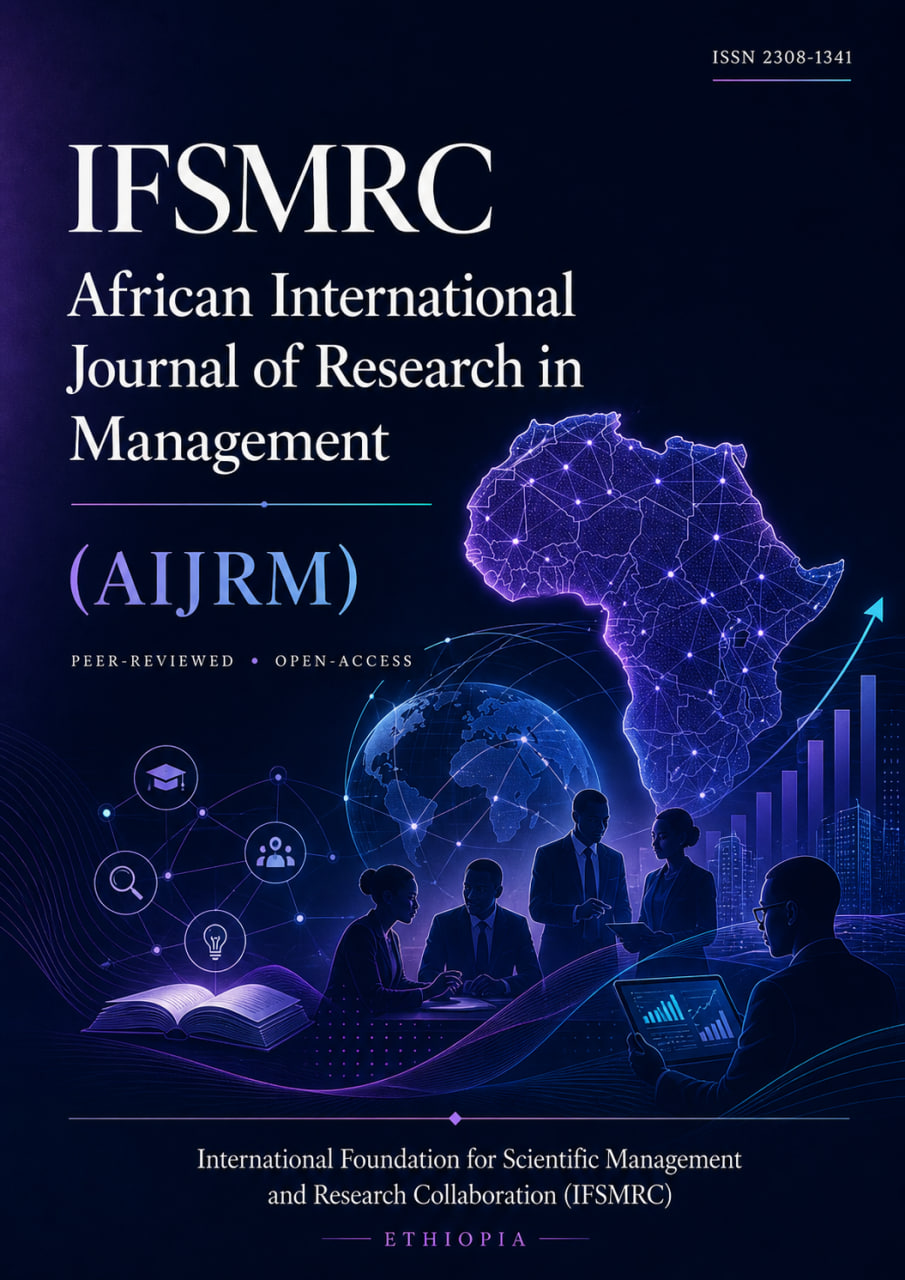
- Cover Image
-
- Downloads
- Published
- 2026-05-28
- Section
- Articles
- License
-

This work is licensed under a Creative Commons Attribution 4.0 International License.
All articles published in the IFSMRC African International Journal of Research in Management (AIJRM) are licensed under the Creative Commons Attribution 4.0 International License (CC BY 4.0). Authors retain full copyright of their work without restriction. By publishing in AIJRM, authors grant the journal the right to publish and distribute the article as the original publisher. This license permits users to read, download, copy, share, and adapt the work for lawful purposes with proper attribution to the author(s) and the journal. All reuse must appropriately acknowledge the original source of publication.

How to Cite
Similar Articles
- Olimov Shukurulla Dilshodjon ugli, INFLATION AND REAL HOUSEHOLD INCOMES: CAUSES, DISTRIBUTIONAL CONSEQUENCES, AND POLICY SOLUTIONS , IFSMRC African International Journal of Research in Management: Vol. 14 No. 06 (2026): IFSMRC African International Journal of Research in Management (AIJRM)
- Jurayev Ozodbek Usmon Ugli, WHO BEARS THE BURDEN OF INFLATION? A COMPARATIVE ANALYSIS OF THE DISTRIBUTIONAL EFFECTS OF INFLATION ACROSS INCOME GROUPS IN CENTRAL ASIA , IFSMRC African International Journal of Research in Management: Vol. 14 No. 06 (2026): IFSMRC African International Journal of Research in Management (AIJRM)
- Niyozov Zuxur Davronovich, Narzullayev Fayozbek Fayzullo o'g'li, Abdujalilov Shexroz Norjigitovich, STATISTICAL ANALYSIS AND ECONOMIC IMPACT OF SOCIAL PROGRAMMES AND PREFERENTIAL LENDING PRACTICES IMPLEMENTED BY COMMERCIAL BANKS , IFSMRC African International Journal of Research in Management: Vol. 14 No. 05 (2026): IFSMRC African International Journal of Research in Management (AIJRM)
- Mehmet Yilmaz, Elif Kaya, DYNAMICS IN URBAN SOLID WASTE MANAGEMENT: EVIDENCE FROM MATTANNUR MUNICIPALITY , IFSMRC African International Journal of Research in Management: Vol. 14 No. 03 (2026): Volume 14 Issue 03
- Kozimjonova Saidaxon Alisher qizi, THE ROLE OF INCOME SOURCE DIVERSIFICATION IN POVERTY REDUCTION , IFSMRC African International Journal of Research in Management: Vol. 14 No. 06 (2026): IFSMRC African International Journal of Research in Management (AIJRM)
- Kozimjonova Saidaxon Alisher qizi, PROBLEMS IN DEVELOPING THE INCOME SOURCES OF THE SELF-EMPLOYED POPULATION AND THEIR SOLUTIONS IN MODERN ECONOMIES , IFSMRC African International Journal of Research in Management: Vol. 14 No. 06 (2026): IFSMRC African International Journal of Research in Management (AIJRM)
- Mansurov Mansur Alisherovich, Shirinova Mushtariybonu Oybek kizi, THE IMPACT OF INFLATION ON THE POPULATION’S CONSUMER BASKET: A STATISTICAL AND SOCIOLOGICAL APPROACH , IFSMRC African International Journal of Research in Management: Vol. 14 No. 05 (2026): IFSMRC African International Journal of Research in Management (AIJRM)
- Isanov Abduvali Tayir ogli, ANALYSIS OF THE ECONOMIC SITUATION AND EFFICIENCY OF UZBEKISTAN'S MAIN TRADING PARTNERS , IFSMRC African International Journal of Research in Management: Vol. 14 No. 06 (2026): IFSMRC African International Journal of Research in Management (AIJRM)
- Yusupova Nigina Djurayevna, THE ROLE OF INDUSTRIAL ENTERPRISES IN THE ECONOMIC DEVELOPMENT OF BUKHARA REGION , IFSMRC African International Journal of Research in Management: Vol. 14 No. 05 (2026): IFSMRC African International Journal of Research in Management (AIJRM)
- Yuldasheva Gulmira Azatovna, THE IMPACT OF TOURISM INFRASTRUCTURE DEVELOPMENT ON ENHANCING REGIONAL ECONOMIC STABILITY , IFSMRC African International Journal of Research in Management: Vol. 14 No. 06 (2026): IFSMRC African International Journal of Research in Management (AIJRM)
You may also start an advanced similarity search for this article.