




 Ethiopia
 Azerbaijan
 Türkiye
 Uzbekistan
 Kazakhstan
 Turkmenistan
 Kyrgyzstan
 Republic of Korea
 Japan
 India
 United States of America
 Kosovo
THE ROLE OF CHEMICAL TERMS IN DEVELOPING SCIENTIFIC LANGUAGE COMPETENCE
- Authors
-
-
Abdullayeva Nigora Kurbanovna,Akromova Shakhzoda Asadulla kizi
Teacher of the Department of Russian Language and Literature Tashkent State Pedagogical University named after Nizami,Faculty of Natural Sciences, Department 102, Chemistry Tashkent State Pedagogical University named after Nizami
Author
-
- Keywords:
- Array
- Abstract
-
This article examines the role of chemical terms in developing scientific language competence among learners of a foreign or second language. Chemical terminology is not only a set of specialized words but also a system of scientific concepts, classifications, symbols, formulas, processes and logical relations. The article argues that learning chemical terms helps students understand scientific texts, participate in academic communication, interpret laboratory instructions, explain processes, compare substances, describe reactions and use precise language in written and oral discourse. Particular attention is paid to terminology, nomenclature, academic vocabulary, conceptual understanding, interdisciplinary learning and communicative competence in science education.
- Downloads
-
Download data is not yet available.
- References
-
1.McNaught A. D., Wilkinson A. Compendium of Chemical Terminology: IUPAC Recommendations. 2nd ed. — Oxford: Blackwell Scientific Publications, 2017. — 464 p.
2.Leigh G. J., Favre H. A., Metanomski W. V. Principles of Chemical Nomenclature: A Guide to IUPAC Recommendations. 2011 ed. — Cambridge: Royal Society of Chemistry, 2011. — 257 p.
3.Halliday M. A. K., Martin J. R. Writing Science: Literacy and Discursive Power. — Pittsburgh: University of Pittsburgh Press, 2013. — 283 p.
4.Wellington J., Osborne J. Language and Literacy in Science Education. — Buckingham: Open University Press, 2001. — 152 p.
5.Lemke J. L. Talking Science: Language, Learning, and Values. — Norwood, NJ: Ablex Publishing Corporation, 2010. — 261 p.
6.Nation I. S. P. Learning Vocabulary in Another Language. 2nd ed. — Cambridge: Cambridge University Press, 2013. — 624 p.
7.Council of Europe. Common European Framework of Reference for Languages: Learning, Teaching, Assessment. Companion Volume. — Strasbourg: Council of Europe Publishing, 2020. — 278 p.
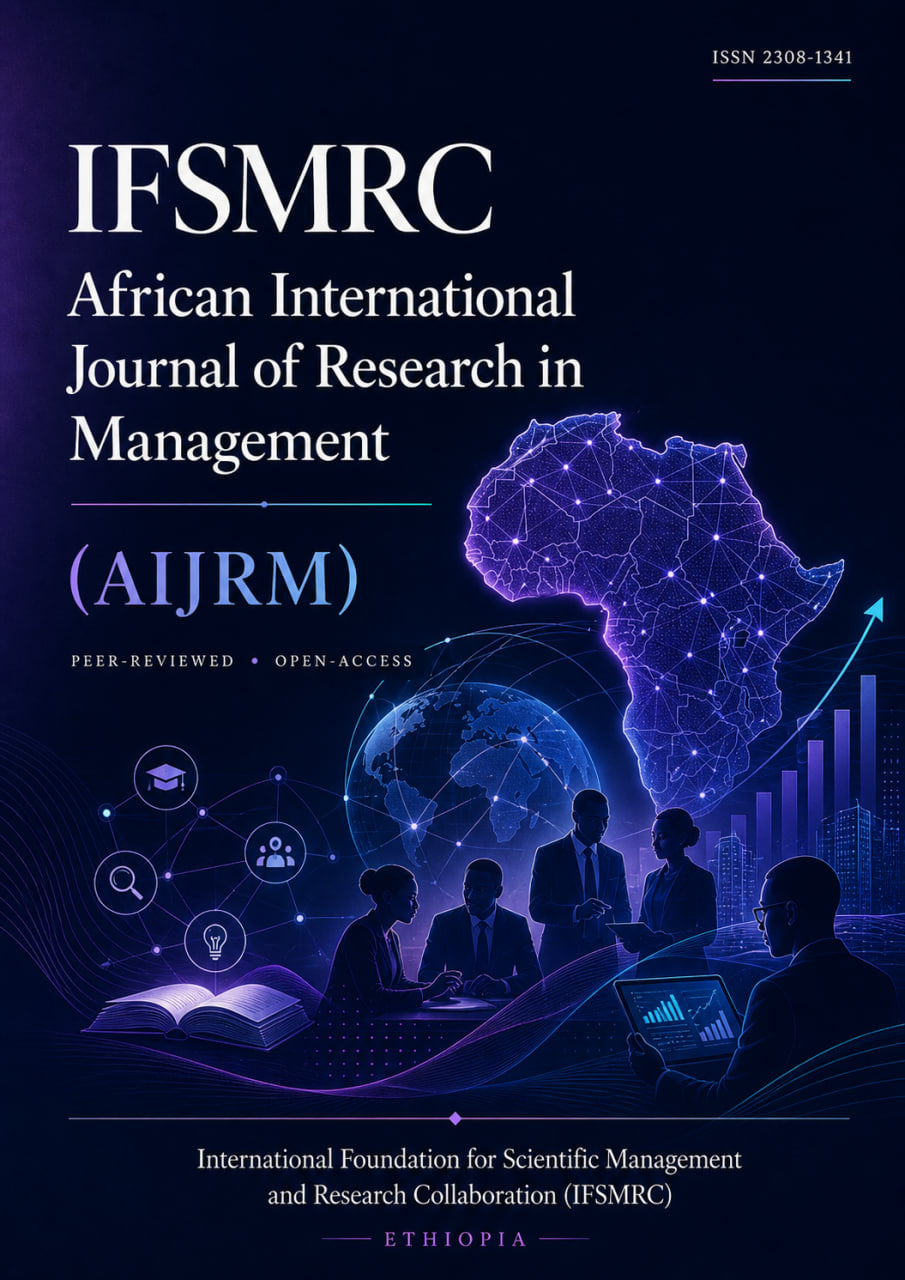
- Cover Image
-
- Downloads
- Published
- 2026-06-02
- Section
- Articles
- License
-

This work is licensed under a Creative Commons Attribution 4.0 International License.
All articles published in the IFSMRC African International Journal of Research in Management (AIJRM) are licensed under the Creative Commons Attribution 4.0 International License (CC BY 4.0). Authors retain full copyright of their work without restriction. By publishing in AIJRM, authors grant the journal the right to publish and distribute the article as the original publisher. This license permits users to read, download, copy, share, and adapt the work for lawful purposes with proper attribution to the author(s) and the journal. All reuse must appropriately acknowledge the original source of publication.

How to Cite
Similar Articles
- Riskulova Dilorom Shagiyazovna, TRANSFORMATION OF METHODS FOR TEACHING THE RUSSIAN LANGUAGE IN THE CONTEXT OF EDUCATION DIGITALIZATION , IFSMRC African International Journal of Research in Management: Vol. 14 No. 05 (2026): IFSMRC African International Journal of Research in Management (AIJRM)
- Azimova Nigora Akhmad kizi, TEACHING KONGLISH VOCABULARY IN KOREAN LANGUAGE EDUCATION: LINGUISTIC CHARACTERISTICS AND PEDAGOGICAL IMPLICATIONS FOR UZBEK LEARNERS , IFSMRC African International Journal of Research in Management: Vol. 14 No. 06 (2026): IFSMRC African International Journal of Research in Management (AIJRM)
- Ayubova Saida Musadjanovna, ENHANCING CONTENT AND LANGUAGE INTEGRATED LEARNING (CLIL) THROUGH THE PEDAGOGICAL POTENTIAL OF ENGLISH LANGUAGE TEACHING: A CONCEPTUAL FRAMEWORK FOR EDUCATION SYSTEMS , IFSMRC African International Journal of Research in Management: Vol. 14 No. 05 (2026): IFSMRC African International Journal of Research in Management (AIJRM)
- Absalomov Mirolim, DEVELOPING STUDENTS’ COMMUNICATIVE COMPETENCE THROUGH A DIFFERENTIATED APPROACH IN TEACHING KOREAN , IFSMRC African International Journal of Research in Management: Vol. 14 No. 06 (2026): IFSMRC African International Journal of Research in Management (AIJRM)
- Markhabo Abdullayeva, Munira Khabibullayevna Khakimova, STRATEGIES FOR CONSOLIDATING VOCABULARY ACQUISITION IN FOREIGN LANGUAGE TEACHING , IFSMRC African International Journal of Research in Management: Vol. 14 No. 05 (2026): IFSMRC African International Journal of Research in Management (AIJRM)
- Zarina Itolmasova, DEVELOPMENT OF LINGUO-METHODOLOGICAL READINESS IN NATIVE LANGUAGE EDUCATION , IFSMRC African International Journal of Research in Management: Vol. 14 No. 06 (2026): IFSMRC African International Journal of Research in Management (AIJRM)
- Rano Xujakulova, DEVELOPING LANGUAGE COMPETENCIES THROUGH ARTIFICIAL INTELLIGENCE TOOLS AND SDG 4 , IFSMRC African International Journal of Research in Management: Vol. 14 No. 05 (2026): IFSMRC African International Journal of Research in Management (AIJRM)
- Piraliyev Omiljon Kabilovich, INTEGRATIVE PEDAGOGICAL-PSYCHOLOGICAL BASIS OF LANGUAGE AND LITERATURE EDUCATION IN THE CONDITIONS OF STUDENTS' ADAPTATION TO THE LEARNING PROCESS AND GLOBALIZATION , IFSMRC African International Journal of Research in Management: Vol. 14 No. 06 (2026): IFSMRC African International Journal of Research in Management (AIJRM)
- Dildorakhon Abdullajonova Akmaljon qizi, MODERN METHODS OF TEACHING SPEAKING SKILLS IN EFL CLASSROOMS , IFSMRC African International Journal of Research in Management: Vol. 14 No. 05 (2026): IFSMRC African International Journal of Research in Management (AIJRM)
- Saidova Makhsudakhon Abbasovna, DEVELOPING PRAGMATIC COMPETENCE IN TEACHING GERMAN SPEAKING SKILLS TO STUDENTS THROUGH ONLINE PLATFORMS , IFSMRC African International Journal of Research in Management: Vol. 14 No. 06 (2026): IFSMRC African International Journal of Research in Management (AIJRM)
You may also start an advanced similarity search for this article.